Australian Aboriginal Landscape Paintings

See Landscape paintings from Central Australian Aboriginal artists at reduced prices. All works are available for sale by enquiry.
 

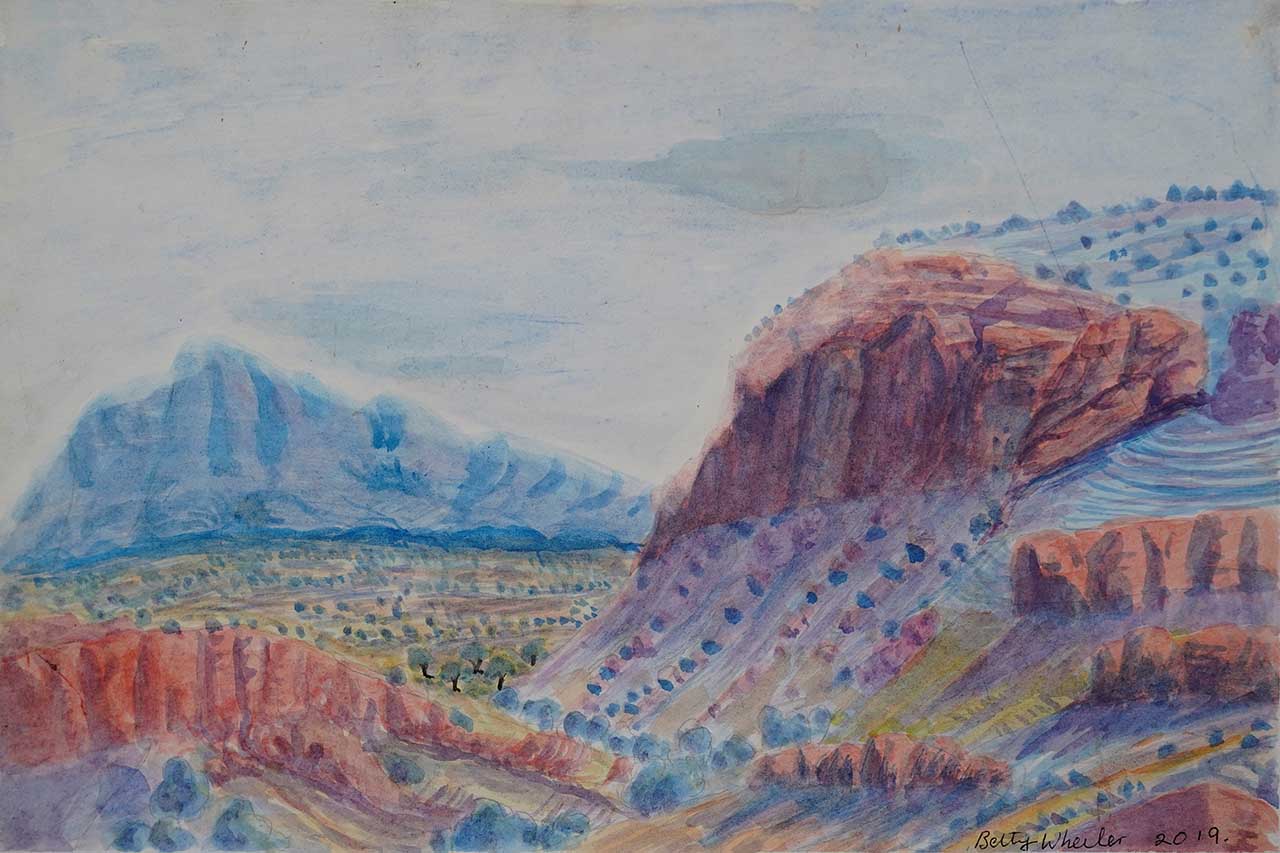
Tjuritja – West MacDonnell Ranges by Betty Wheeler Naparula

Betty Wheeler Naparula  |  Tjuritja – West MacDonnell Ranges

Jap 016816  |  watercolour on paper  |  17 x 26 cm

Add To Enquiry Cart    ► How To buy

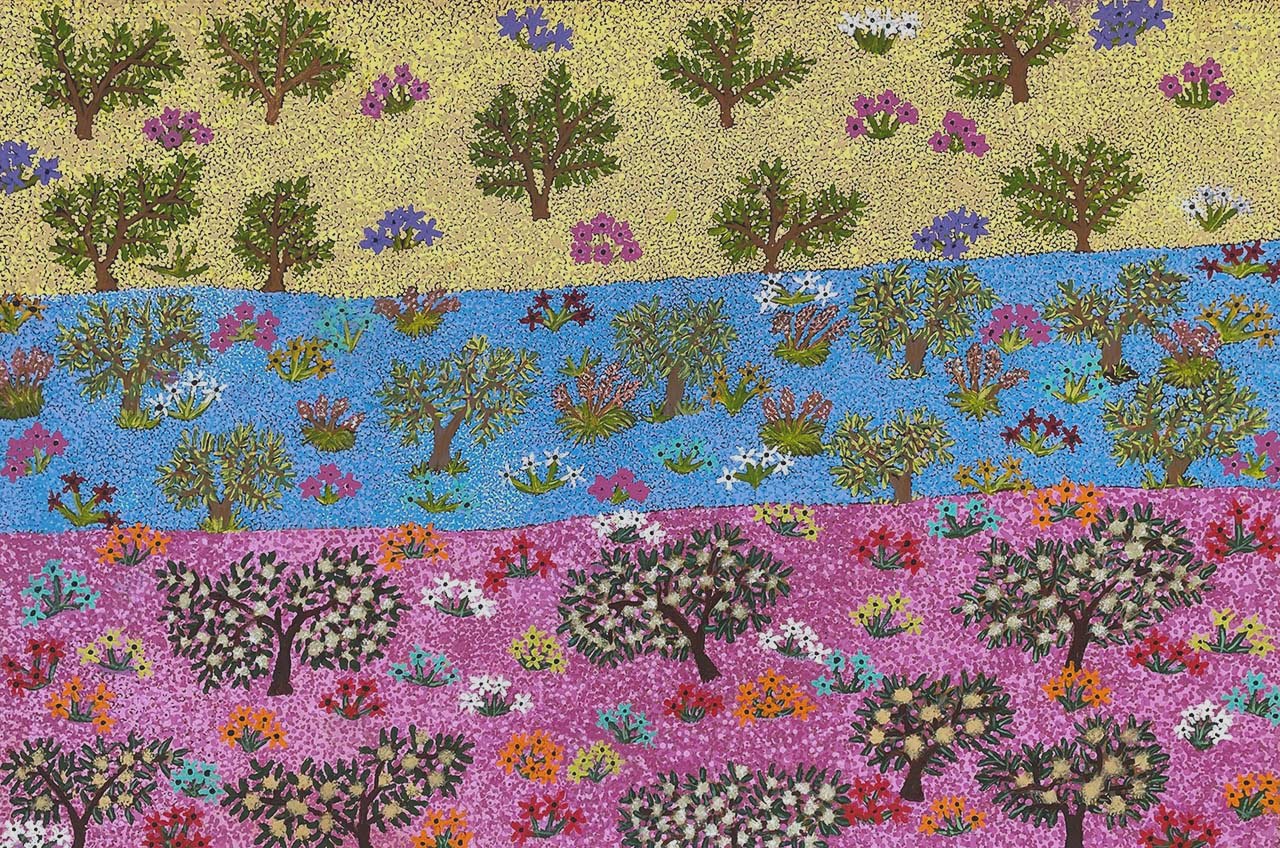
The Swamp by Jessie Peterson

Jessie Peterson  |  The Swamp

Jap 024344  |  acrylic on canvas  |  61 x 91 cm

Add To Enquiry Cart    ► How To buy

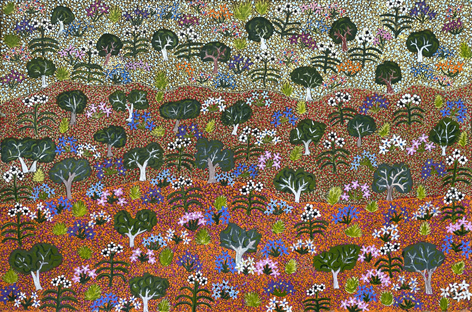
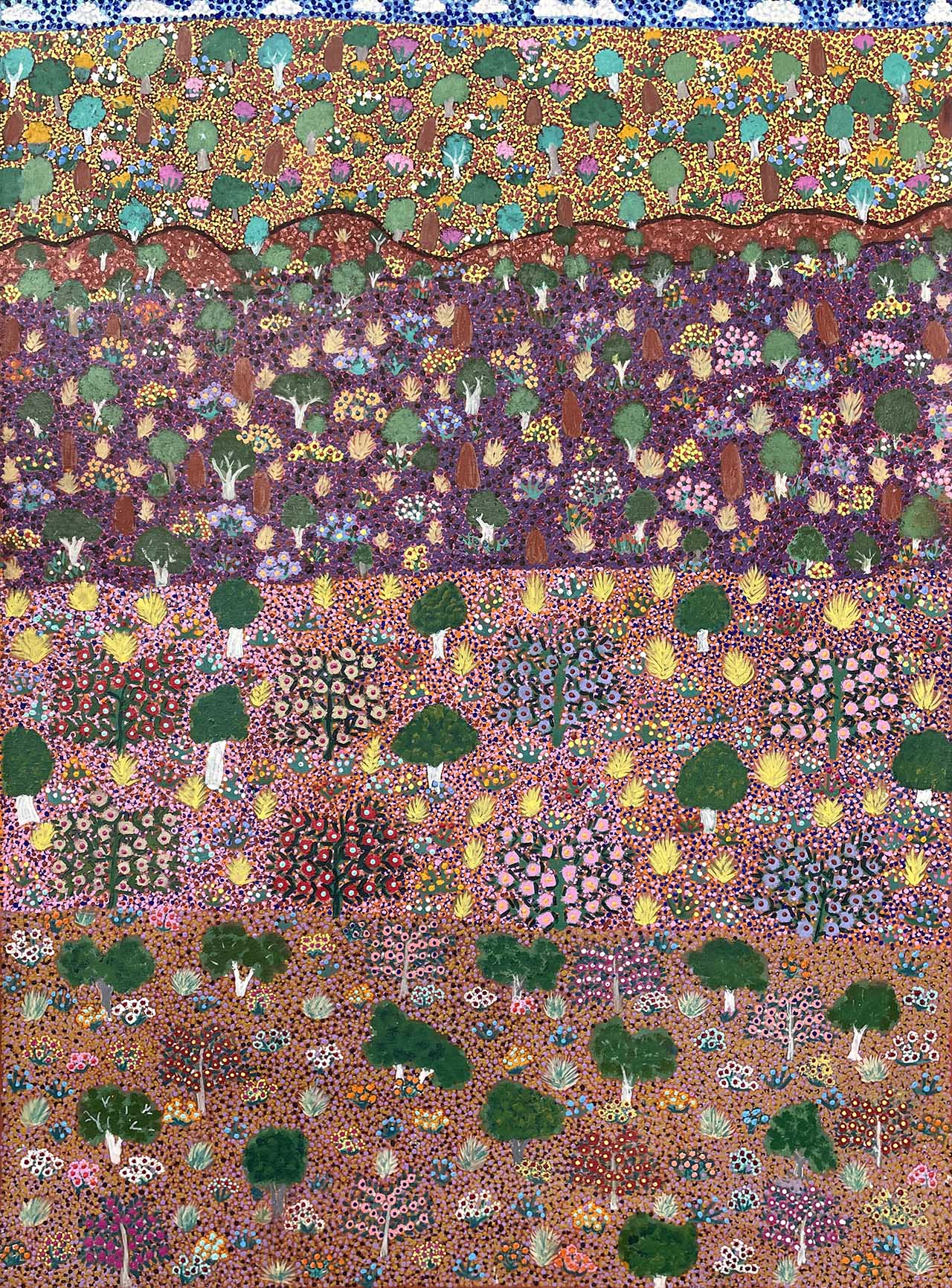
Bush Flowers by Jessie Beasley

Jessie Beasley  |  Bush Flowers

Jap 024353  |  acrylic on linen  |  107 x 76 cm

Add To Enquiry Cart    ► How To buy

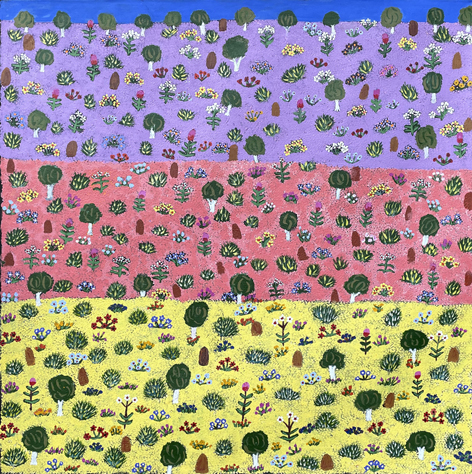
Bush Flowers by Jessie Beasley

Jessie Beasley  |  Bush Flowers

Jap 024332  |  acrylic on canvas  |  30 x 30 cm

Add To Enquiry Cart    ► How To buy

Bush Flowers after Rain by Jessie Beasley

Jessie Beasley  |  Bush Flowers after Rain

Jap 024348  |  acrylic on canvas  |  91 x 61 cm

Add To Enquiry Cart    ► How To buy

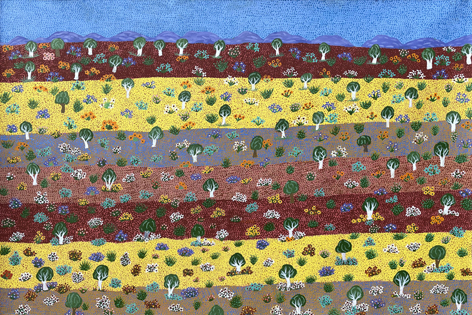
Hatcher Creek by Jessie Beasley

Jessie Beasley  |  Hatcher Creek

Jap 024351  |  acrylic on linen  |  100 x 150 cm

Add To Enquiry Cart    ► How To buy

Bush Medicine by Joycie Morton Petyarre

Joycie Morton Petyarre  |  Bush Medicine

Jap 024641  |  acrylic on linen  |  60 x 45 cm

Add To Enquiry Cart    ► How To buy

Morning Light in the Stirling Ranges by Bella Kelly

Bella Kelly  |  Morning Light in the Stirling Ranges

Jap 024672  |  Water Colour/Gouche on Paper  |  50 x 35 cm

Add To Enquiry Cart    ► How To buy

Burn Off by Bella Kelly

Bella Kelly  |  Burn Off

Jap 024673  |  Water Colour/Gouche on Paper  |  36 x 27 cm

Add To Enquiry Cart    ► How To buy

Bush Flowers by Jessie Beasley

Jessie Beasley  |  Bush Flowers

Jap 024347  |  acrylic on canvas  |  91 x 61 cm

Add To Enquiry Cart    ► How To buy

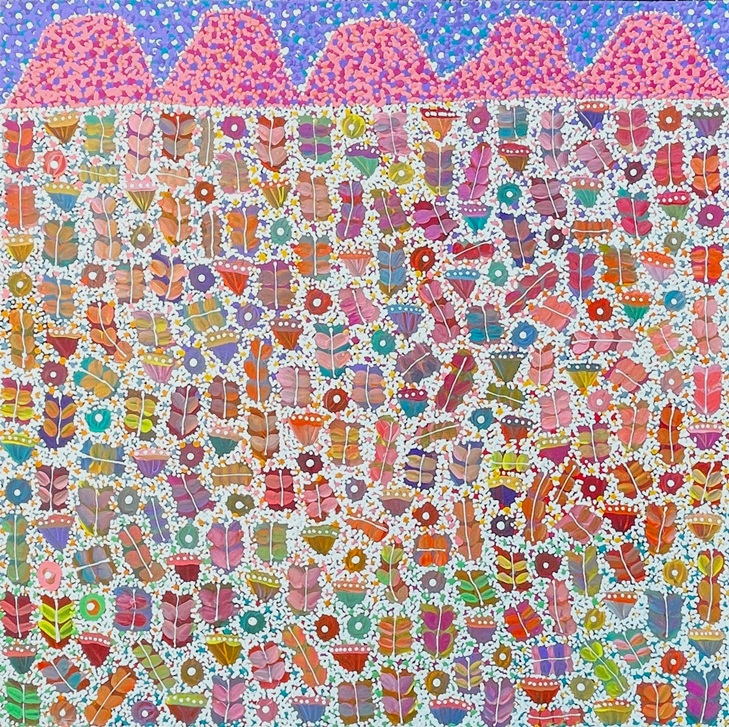
Bush Flowers by Jessie Beasley

Jessie Beasley  |  Bush Flowers

Jap 024352  |  acrylic on linen  |  107 x 107 cm

Add To Enquiry Cart    ► How To buy

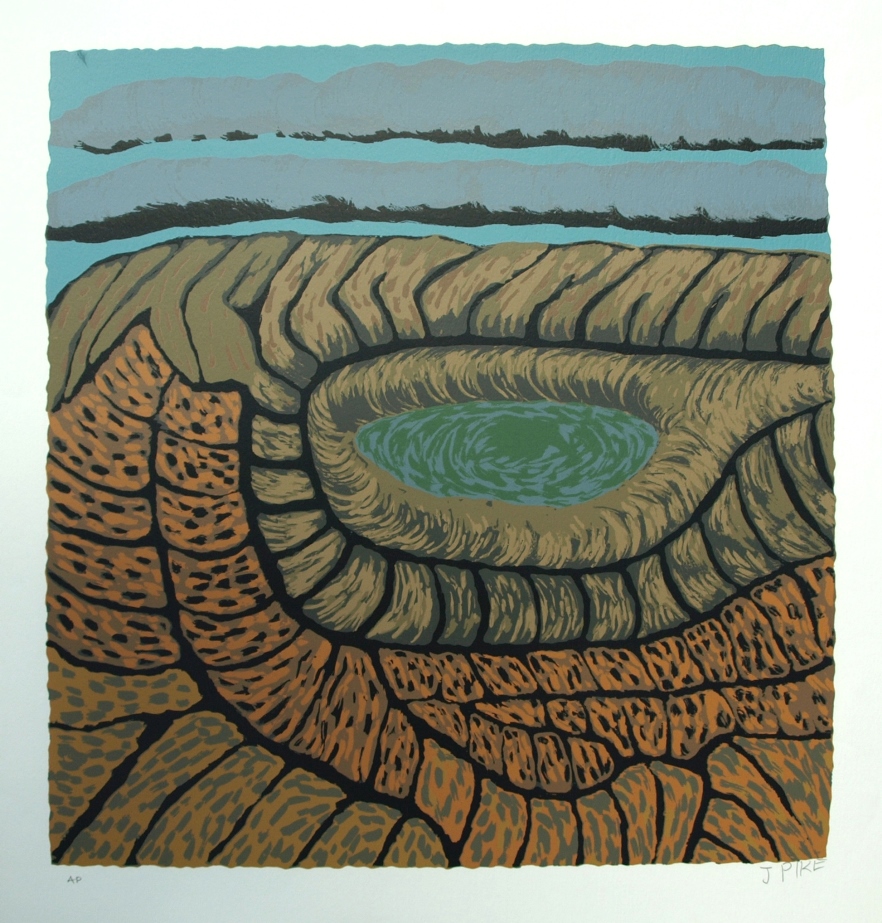
Jarrngajartu Rockhole by Jimmy Pike

Jimmy Pike  |  Jarrngajartu Rockhole

Jap 018809  |  limited edition screenprint  |  52 x 50 cm

Add To Enquiry Cart    ► How To buy

Bush Medicine by Joycie Morton Petyarre

Joycie Morton Petyarre  |  Bush Medicine

Jap 024644  |  acrylic on linen  |  60 x 45 cm

Add To Enquiry Cart    ► How To buy

Bush Flowers by Jessie Beasley

Jessie Beasley  |  Bush Flowers

Jap 023500  |  acrylic on canvas  |  91 x 91 cm

Add To Enquiry Cart    ► How To buy

Storm Clouds Gathering by Bella Kelly

Bella Kelly  |  Storm Clouds Gathering

Jap 024674  |  Water Colour/Gouche on Paper  |  36 x 27 cm

Add To Enquiry Cart    ► How To buy

Ninjya – Soggy Swamp by Jessie Peterson

Jessie Peterson  |  Ninjya – Soggy Swamp

Jap 021337  |  acrylic on linen  |  61 x 61 cm

Add To Enquiry Cart    ► How To buy

Bush Medicine by Joycie Morton Petyarre

Joycie Morton Petyarre  |  Bush Medicine

Jap 024645  |  acrylic on linen  |  60 x 60 cm

Add To Enquiry Cart    ► How To buy

Swamp and Bush Medicines by Jessie Beasley

Jessie Beasley  |  Swamp and Bush Medicines

Jap 021335  |  acrylic on linen  |  122 x 91 cm

Sold

Afternoon Light by Jimmy Pike

Jimmy Pike  |  Afternoon Light

Jap 018811  |  limited edition screenprint  |  42 x 60 cm

Add To Enquiry Cart    ► How To buy

Thunderstorm at the Bore by Rekisha Morrison

Rekisha Morrison   |  Thunderstorm at the Bore

Jap 021325  |  acrylic on linen  |  91 x 61 cm

Add To Enquiry Cart    ► How To buy

Out Bush by Margaret Boko

Margaret Boko  |  Out Bush

Jap 024030  |  acrylic on canvas  |  90 x 60 cm

Add To Enquiry Cart    ► How To buy

Bush Flowers by Jessie Beasley

Jessie Beasley  |  Bush Flowers

Jap 023502  |  acrylic on linen  |  91 x 61 cm

Sold

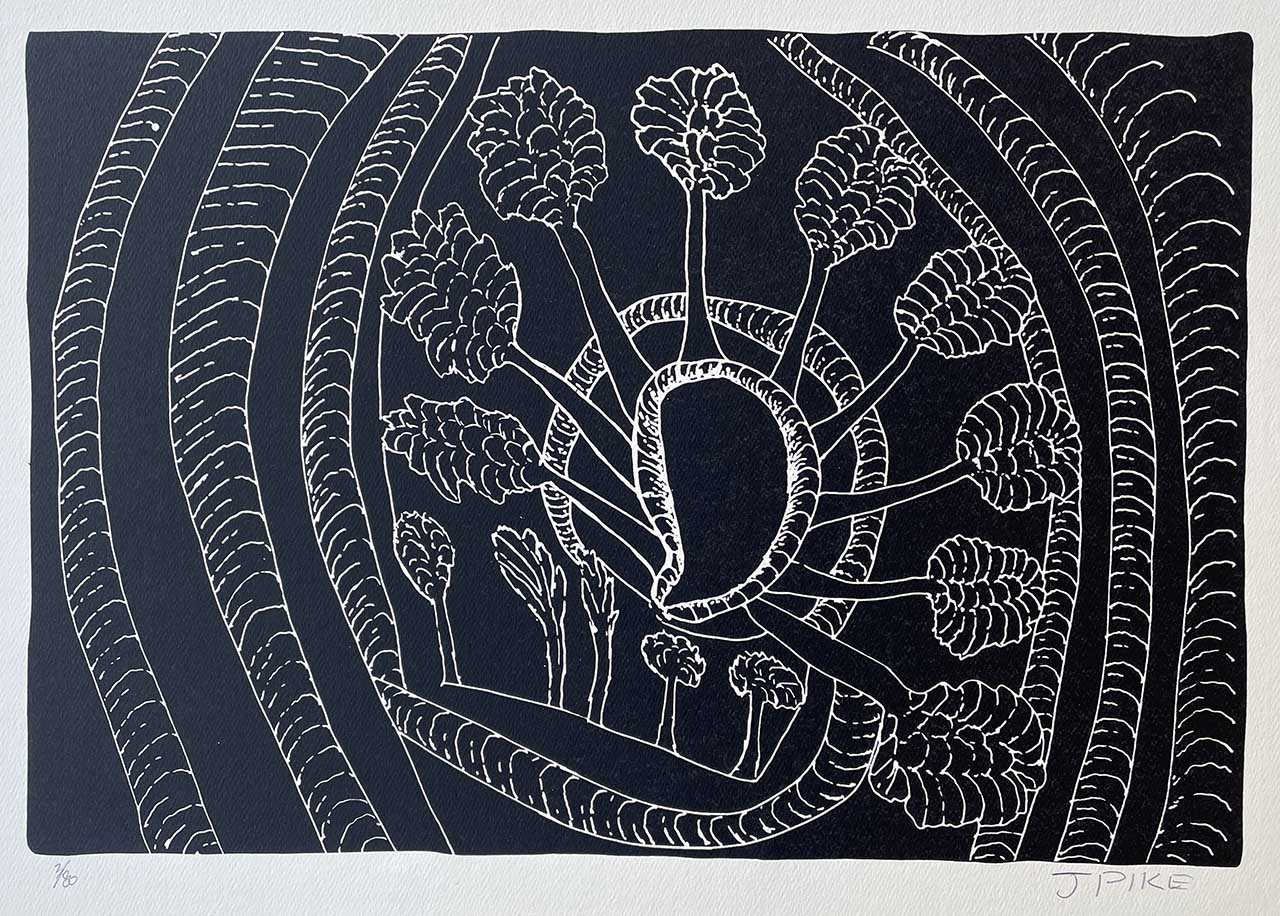
Parapara Karparn and Wirrikari by Jimmy Pike

Jimmy Pike  |  Parapara Karparn and Wirrikari

Jap 018801  |  limited edition screenprint  |  30 x 44.5 cm

Add To Enquiry Cart    ► How To buy

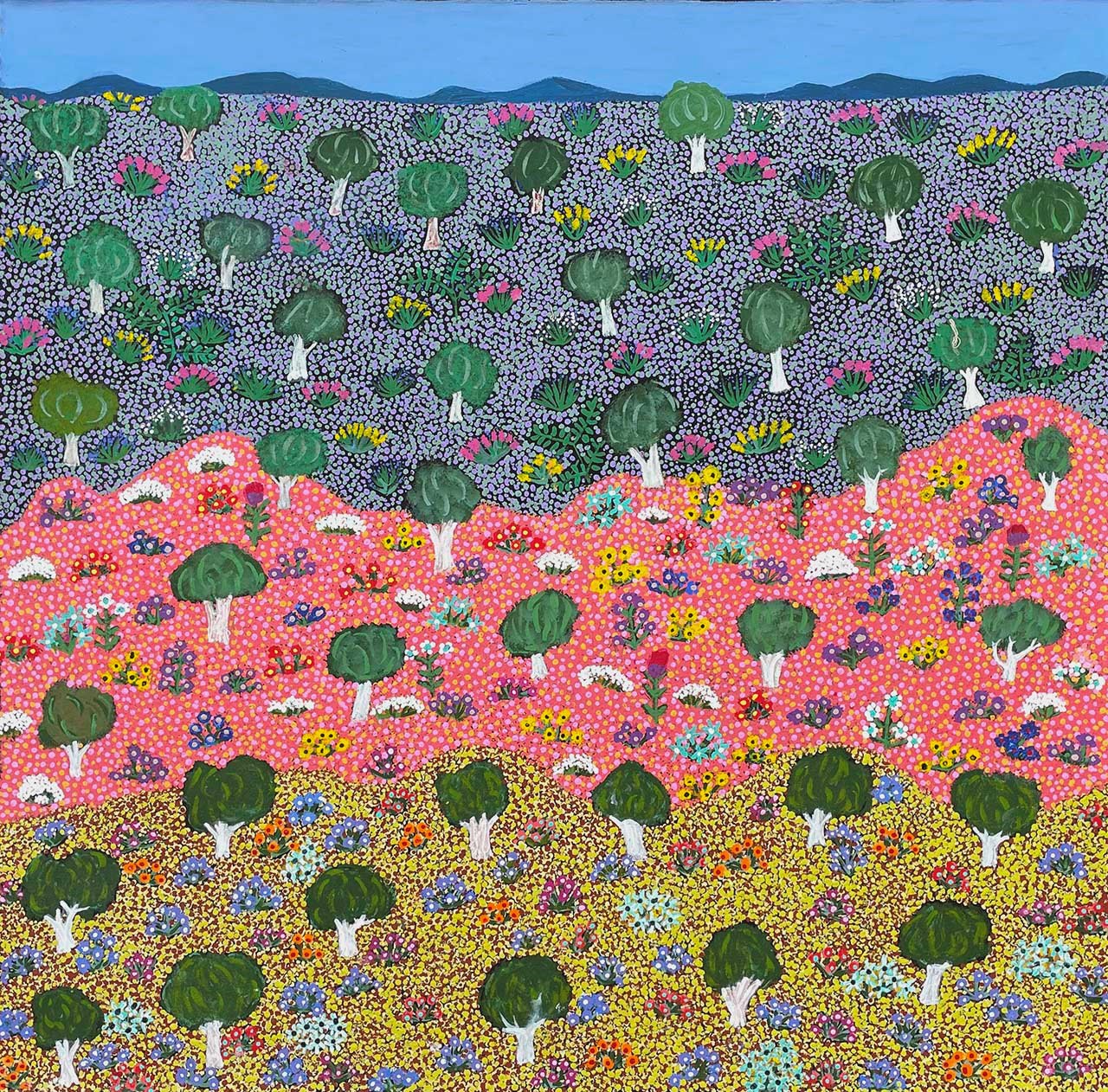
Aboriginal art has maintained a different approach to Western art in the way in which landscapes are presented. Many Aboriginal paintings show the terrain more as a map seen from above. This accords with the idea that Indigenous people needed to maintain a conceptual map in their head of the territory over which they travelled. With only memory and song to aid them in understanding their Country, these visual maps have more recently been rich resources of artistic expression for painters when recreating their Country. On one level these maps of terrain show the physical world of the artist, but on top of that may be laid out the metaphysical information that relates to this Country. So landscapes contain associated information on Dreaming and ceremonial sites, Creation journeys and Songlines, sources of food, water and other natural resources. The landscape becomes an index of resources and meaning for the artist. The desert artists who laid out these landscape maps are hunters and trackers. They are accustomed to looking down and reading the information that the desert sands reveal about everything that has passed this way. So to some extent the majority of desert paintings are landscapes that hold great meaning and information for the people of the land.

Other Aboriginal artists have made a conscious choice to present landscapes of their own Country more in the format familiar in Western art. Famously Albert Namatjira gained sensational recognition during the 1940s and 1950s with exquisite watercolours that revealed the beauty of the desert interior of Australia. Perhaps surprising his audience with both the realist skills of his art and the sense of colour contrasts of the desert, Namatjira established a legacy that continues to this day. His extended family continues to paint in the Hermannsburg watercolour tradition.

Other artists have blended the styles of realistic landscape painting with the techniques of aerial perspective and dot painting infill. Artists from the Alyawarr language groups at Ampilatwatja and neighbouring communities in Central Australia have elected not to directly paint references to the stories of their Dreamings, but to show the landscapes where the Creation mythologies took place. Their landscapes are seen from an elevated position and are composed of tiny dots covering the surface of the painting.

The role of landscape painting may well have a different purpose in Aboriginal art than in Western art. It remains a representation of particular location, but one that is often loaded with other information shown in symbolic form. Perhaps what we need to extract from these landscapes is an appreciation of the knowledge and history that goes into these images of the land. We hope this selection of works is a useful overview of the range of Aboriginal landscapes being produced in Australia today.

View paintings from Aboriginal art regions: